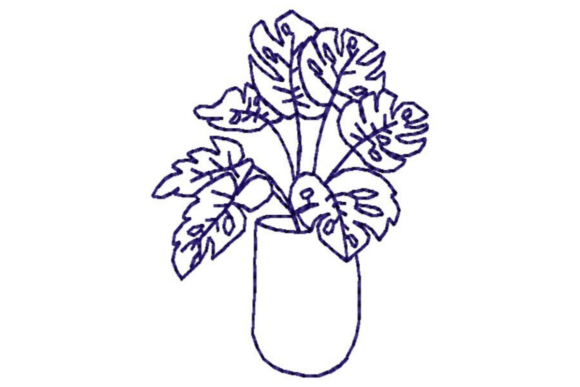
Reviewing Potted Fern Outline for Craft Fair Success
As an embroidery designer who has spent countless weekends standing behind booth tables, I have learned that not every design translates well from a digital screen to a physical product. When I first loaded the Potted Fern Outline into my digitizing software, my immediate reaction was one of relief. In a market saturated with overly complex, dense patterns, this design offers a breath of fresh air. It is defined by its simplicity and versatility, qualities that are often harder to execute perfectly than intricate shading.
For those of us running small shops or selling as Etsy sellers, the pressure to produce high-volume, high-quality items is real. This machine embroidery design fits squarely into the current trend of minimalistic home decor and botanical aesthetics. But does it hold up under the scrutiny of a craft fair customer? Let’s break down how this piece performs in the real world of handmade products.
First Impressions and Aesthetic Appeal
The visual language of Potted Fern Outline is unmistakably modern and soft. It does not scream for attention with bright, clashing colors or heavy fill stitches. Instead, it whispers elegance. This makes it an ideal candidate for customers who appreciate a farmhouse or Scandinavian-inspired look. Because it is an outline style, it avoids the stiffness that sometimes plagues filled embroidery, allowing the natural texture of the fabric to shine through.
When placed within the broader category of Outline Flowers, this fern stands out because of its structural balance. The pot provides a solid base, while the fronds offer organic movement. For a boutique maker, this means the design feels premium rather than mass-produced. It suggests a thoughtful curation of style, which is exactly what buyers are looking for when they pick up a handmade product at a local market.
Product Versatility and Application
The true test of any digital embroidery file is its adaptability. I evaluated this design across several potential craft fair products to see where it would generate the most sales.
- Tote Bag Design: This is perhaps the strongest application. A canvas tote with a single, centered fern outline looks chic and intentional. It transforms a basic bag into a statement accessory without overwhelming the material.
- Tea Towel Embroidery: Kitchen textiles are staples at craft fairs. The delicate lines of the fern complement the weave of linen or cotton towels beautifully. It adds a touch of nature to the kitchen without feeling cluttered.
- Apron Embroidery: Placing the design on the bib of a half-apron creates a focal point that is both decorative and professional. It appeals to home cooks and gardeners alike.
- Embroidered Patch: If you offer patches, this design works well if scaled correctly. However, you must ensure the outline stitches are dense enough to hold their shape on a standalone patch backing.
- Pillow Covers: As mentioned in the product description, this design is great for pillows. A neutral pillowcase with a subtle green or charcoal fern outline invites touch and comfort.
Beyond these items, consider using it on caps or small pouches. The minimalistic look ensures that the design does not distort easily on curved surfaces, provided you use the right stabilizer.
Production Practicality for Small Shops
For a creative entrepreneur, time is money. One of the biggest advantages of Potted Fern Outline is its efficiency. Because it relies on outlines rather than dense satin fills or complex step stitches, the run time is significantly shorter. This allows for faster batch production, which is crucial when preparing inventory for a weekend event.
Photography is another critical factor. This design photographs exceptionally well for online listings. The clean lines create high contrast against light fabrics, making your printable mockup and actual product photos look crisp and professional. For an Etsy seller, this clarity can lead to higher click-through rates because the buyer can instantly understand the design quality.
Technical Considerations and Careful Use
While the design is simple, it is not without technical requirements. To ensure your finished product meets professional standards, keep the following points in mind:
- Stitch Density: Since this is an outline, ensure the stitch density is sufficient to prevent gaps, especially if using slippery fabrics like silk or rayon blends.
- Fabric Texture: Avoid using this design on highly textured towels where the small details might get lost in the pile. Smooth cotton or linen is ideal.
- Thread Colors: Contrast is key. On dark fabric, use a light thread to maintain visibility. On white fabric, a deep forest green or charcoal gray will provide the best definition.
- Hooping: Always check your hoop size compatibility. While the design is likely small, ensure it fits comfortably within your standard hoops without requiring excessive re-hooping for multi-position designs.
- Stabilizer Choice: Use a cut-away stabilizer for stretchy fabrics like tote bags to prevent distortion over time. For woven tea towels, a tear-away may suffice, but test first.
Enhancing Brand Consistency and Buyer Engagement
Using a cohesive design element like Potted Fern Outline helps build brand recognition. If you use this motif across your tote bags, aprons, and packaging tags, customers begin to associate that specific botanical style with your shop. This consistency builds trust and perceived value.
At a craft fair, booth display strength is vital. Items featuring this design can be grouped together to create a "botanical corner" in your booth. This thematic grouping draws the eye and encourages customers to browse multiple items. The simplicity of the design allows it to pair well with other products, such as plain ceramics or dried flower arrangements, enhancing the overall aesthetic of your display.
Final Designer Notes
Before you commit to producing a large batch of commercial embroidery products, always test the design on scrap fabric similar to your final material. Check the thread tension and inspect the back of the stitching to ensure no loose loops. Create at least one real mockup to see how the design scales in person versus on screen.
Additionally, always confirm the licensing terms of your digital embroidery file. Ensure you have the rights to sell finished products made with this design. If the product description does not specify stitch count or exact file formats, reach out to the designer or check the download package carefully before starting production.
In conclusion, Potted Fern Outline is a reliable, aesthetically pleasing asset for any embroidery business. It balances ease of production with high visual appeal, making it a smart choice for both new and experienced makers looking to expand their craft fair offerings.